


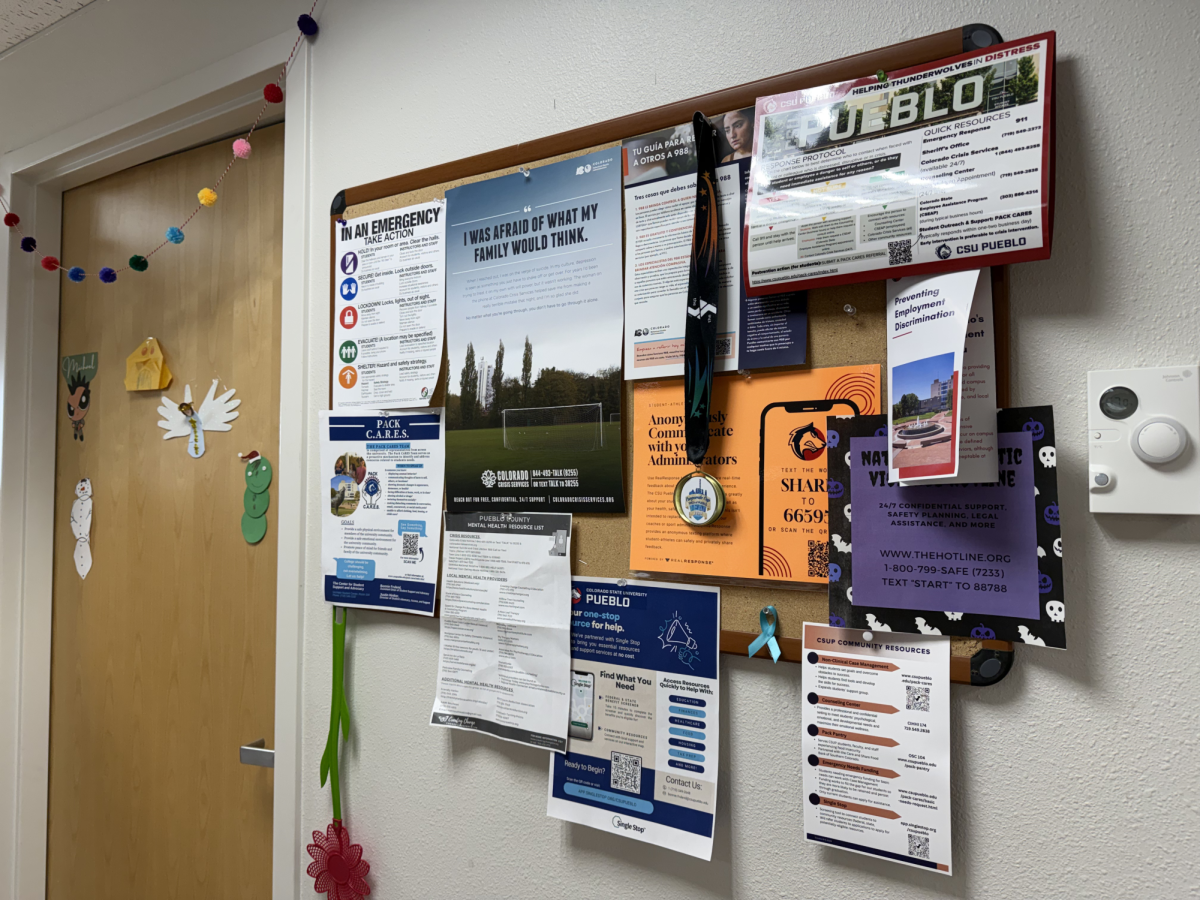
Editor’s Note: We would like to acknowledge that the contents of this article may be sensitive. If you have experienced sexual assault or abuse, Pueblo is home to a 24/7 hotline that provides resources and confidential conversation. Please call (719) 549-0549 if you feel that you need assistance.
April is Sexual Assault Awareness and Prevention Month (SAAPM), marking the 25th anniversary of the national designation being applied to the month. This designation has boosted awareness events and campaigns, but many survivors don’t have easy access to resources that support them. CSU Pueblo is taking active steps in changing this for students on campus.
Sexual assault can be defined in a variety of degrees, can be experienced by any gender, and can be inflicted by any one person including in domestic relationships. The stigma behind sexual assault can lead survivors to experience fear when reporting, but CSU Pueblo wants to guarantee students are in a safe place.
Shelby Serena, the director of civil rights and compliance as well as Title IX coordinator on campus, has been serving CSU Pueblo for a little over three years. She began as an investigator, which is who looks directly into cases on campus, even if an incident didn’t happen on campus.
The Title IX office is who received any complaints of sexual misconduct, as well as harassment and discrimination of protected classes. The Violence Against Women’s Act (VAWA) is also looped in under sexual misconduct, which also investigates cases of domestic violence, dating violence, stalking, and sexual assault.
The office also pushes forward several initiatives to ensure that students and faculty have an understanding of how to report a crime and what to be aware of. Blackboard training is mandatory for faculty and optional for students, with additional class visits to discuss Title IX. All professor faculty on campus are also mandatory reporters, ensuring an outlet for students to discuss any incidents.
The Process
Reporting an incident can be accessed in a variety of ways, including showing up in person to the Title IX office in the Buell Communication Center and by filling out a complaint online through the Title IX office page on the official CSU Pueblo website.
For many, not knowing the process can be intimidating. After a complaint is filed, someone from the office will contact the complainant to set up a time to meet. Upon meeting, an intake will be done where resources are offered, whether or not the survivor wants to file an official complaint, and next steps are discussed.
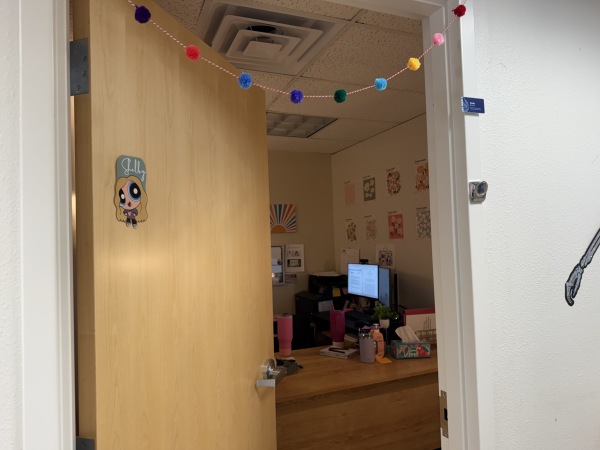
Serena noted one of the most common misconceptions about Title IX is that if a student comes into the office, they have to make an official complaint. This is not true, as the Title IX office serves as a place to also find resources and function as a safe place to discuss any incidents without officially having to report a crime. It is common for survivors not to want to make an official report for a variety of reasons.
If an official complaint is made, then a ‘notice of investigation’ is issued to all parties involved.
“I can talk to the parties about not about the case, the information of the case, but procedural stuff,” Serena said. “Once my investigator has just finished up with the report, that means it’s going to go to a live hearing, which is a scary thing to hear.”
The live hearing consists of meeting with both parties separately, discussing what the process will look like, then meeting with a hearing officer. In Title IX cases, any decisions in the hearing are made by an external partnership. The actual hearing takes place virtually, as to avoid both parties having to meet in the same space.
While the hearing process may take a while, there are steps that can be done to ensure comfort for those involved in the case in the meantime.
“It’s different from what you would see in the criminal system or the civil system, where usually the victim is getting a no contact order or protection order against the perpetrator. We do ours mutually, meaning neither party can contact each other. Those protective measures are put into place as supportive measures to ensure equal access to the campus program and activities, making sure that they can still attend classes or still attend the clubs that they’re in,” Serena explained.
In the reporting process, the office will also assist in getting information to the right sources if the assault didn’t take place on campus, such as connecting with the local police department to file a report. Even if a survivor doesn’t want to report a crime, they will also still be provided with the resources to go to the local hospital for a forensic examination and medical care, where the exam can be conducted without reporting.
Community Protecting Community
As April in Sexual Assault Awareness month, the Title IX office has been collaborating with a variety of sources to campaign for awareness. Tabling in popular campus spots like the OSC, where students can approach, ask questions, and discuss has been one of their key ways to connect with the community, but this year, they’re expanding.
The Title IX office recently received a partnership grant from the Office of Violence Against Women (OVW) to bring more activities involving important discussions around awareness. The grant has involved several sections of campus, including student conduct and campus safety and law enforcement.
“Something we’ve talked a lot about doing is, how can we engage men in this type of work?” Serena said.
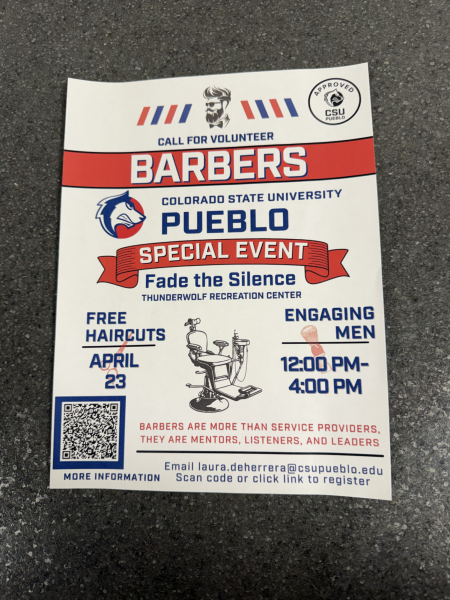
On Thursday, April 22, an event will be taking place in the Recreation Center called Fade the Silence, where free haircuts will be offered to men around campus. During the timeframe, 12 – 4 p.m., the area will be a space for healthy discussion on preventing sexual assault, being aware of red flags, and being responsible.
Denim Day is also a large push for the Title IX office, involving campus in a national awareness campaign that happens the last Wednesday of the month every April. This year, on the 29, students and faculty are being encouraged to wear denim as a form of passive solidarity with survivors. This will be accompanied by information around the importance of standing with survivors.
Students, faculty, and community members may also consult RAINN, which is a national-scale anti-sexual violence organization that hosts the National Sexual Assault Hotline. Every call to this hotline is free, confidential, and available 24/7 to assist survivors. Finding resources, taking next steps in reporting, and offering a safe space to discuss what happened are all services offered.
Prevention tips can be found on RAINN’s website.
The Pueblo local partner with RAINN is Juniper Southern Colorado, whose 24-hour hotline number is (719) 549-0549.