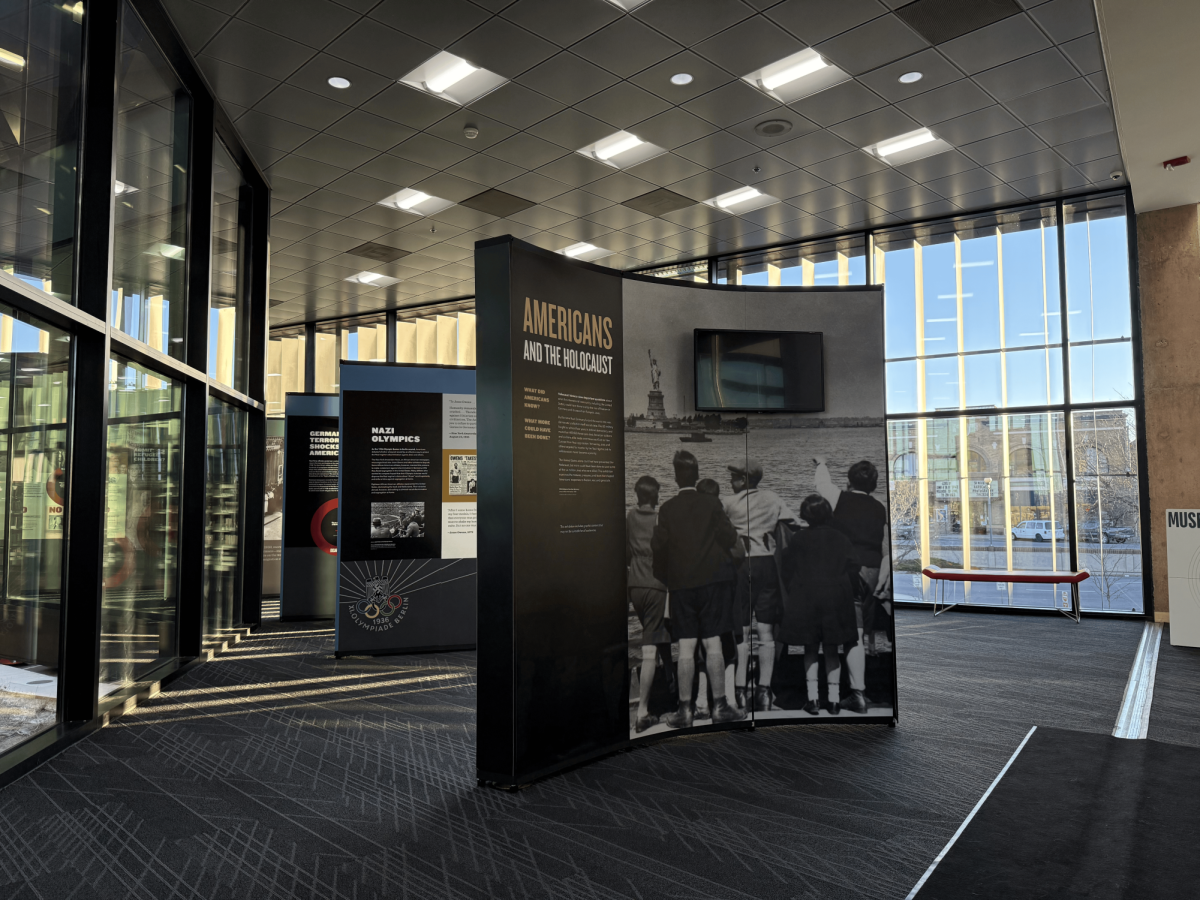



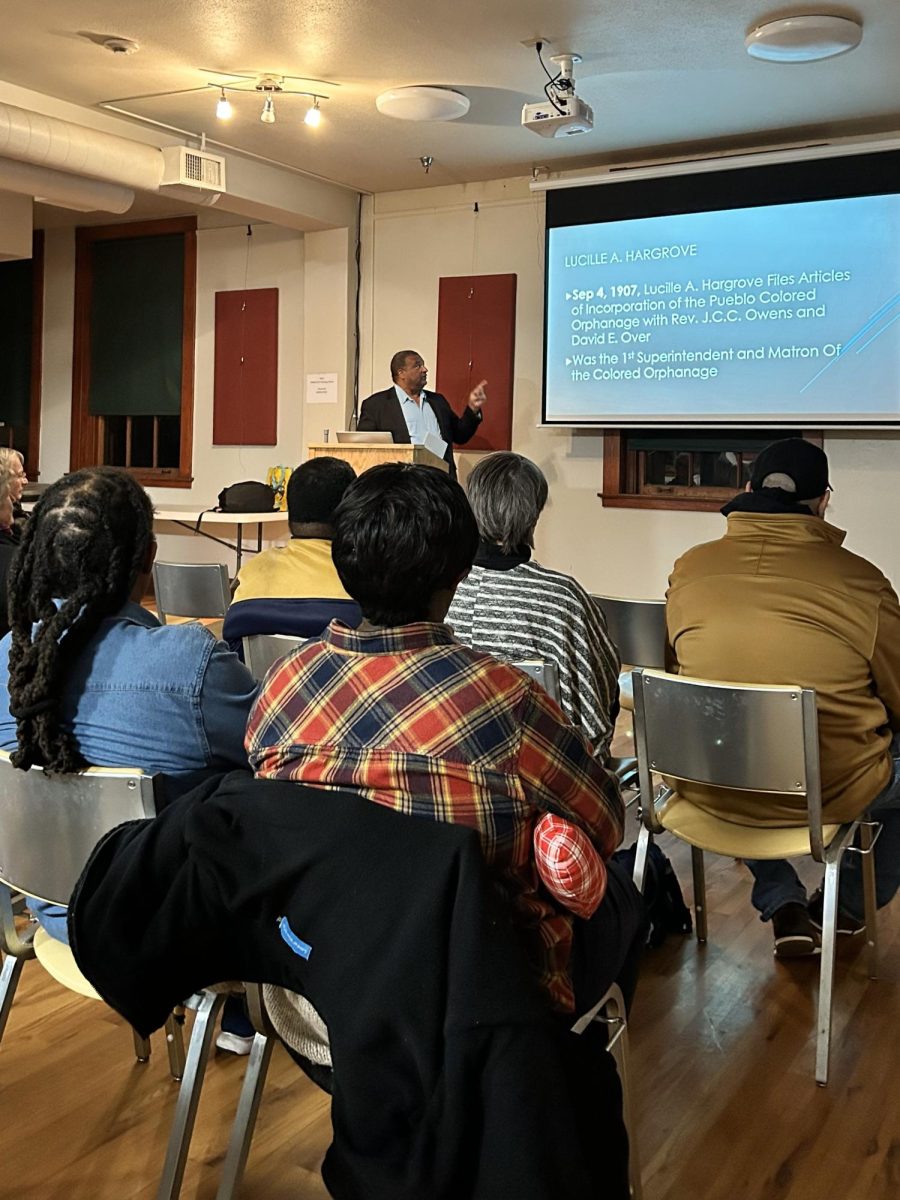
On February 18, 2026 at 5:30 p.m. the Pueblo Heritage Museum hosted a ribbon cutting ceremony for its newest permanent exhibit, Building Pueblo: A Legacy of Black Communities, in honor of historical African American figures in Pueblo. The ceremony was followed by a lecture by Ray Brown, a local dedicated to researching, presenting, and educating about these topics, where he recounted Black history in Pueblo and told the story of the Lincoln Home, Colorado’s first and only orphanage serving people of color, established in 1914.
Ray Brown Tracing African American History
In 2012, Brown relocated to Pueblo to be closer to support his daughter and granddaughter. Shortly after, he met Ruth Steele at the public library, a woman who had dedicated her life’s work to these projects. She then introduced him to the Pueblo Heritage Museum and he now dedicates his time to researching the history of Pueblo, specifically African American history.
Since then, Brown has led several projects expanding upon what was previously known about African Americans in Pueblo. His earliest efforts involved developing exhibits honoring historical military figures like the Buffalo Soldiers, and the creation of the memorial honoring key Black figures in the United States military from the Revolutionary War through the Vietnam War.
The lecture walked the audience through a timeline of the figures who were most influential in the organization of the Lincoln Home and examples of it influenced lives in the 1900’s.
“I could have talked about the home, but it’s so much more meaningful if you learn a little bit about how the people affected it and what was going on in the community,” Brown said.
Ruth Steele (1935-2021)
Before Brown joined the efforts of the public historical society, it was Ruth Steele, a renowned civil rights activist who dedicated her life’s work to preserving Black history in Colorado, who introduced him to the Pueblo Heritage Museum and her working progress with the Lincoln Home.
Steele was an instrumental figure in establishing Dr. Martin Luther King Jr.’s birthday as a state holiday in Colorado and was recognized by Coretta Scott King for the Dr. Martin Luther King Humanitarian Award for her efforts – one of several decorations of honor awarded to her in her lifetime. She also founded the Dr. Martin Luther King, Jr. Pueblo Colorado Holiday Commission.
She was proud to proclaim, “Pueblo has the only statue of Dr. MLK Jr. and Emmet Till in the Universe.” Steele led efforts to have the statue moved to Pueblo from being stored in Denver after it was replaced in the city park.
Brown explained that in somewhere near 1997-1998, after several years of “relentless” effort to get the current owner of the property to sell her the home, it was donated to the commission. Steele poured various forms of effort into repairing the physical structure of the home and establishing it as a historical site in Pueblo, and therefore preserving its presence in the community. For 14 years, it served as a living museum of the Lincoln Home.
The artifacts from the home now live in storage near the Pueblo Chemical Depot, awaiting a permanent space. Friendly Harbor, a local nonprofit organization assisting people with mental health conditions and their families, established ownership after the city reclaimed the property following financial concerns.
Roselawn Cemetery
“Even though it’s not segregated, it’s separated,” Brown said, referring to grave plots at the Roselawn Cemetery in the eastern region of Pueblo County. Steele had shown him the burial cards for the cemetery and they worked together on the project before her death and he has continued it.
“There are over 536 African Americans buried out there out of a total of over 2,500 people. There’s 500 of them that are Black and most of them are buried there without markers,” Brown said. “Why are all these black people buried here and there’s no markers?”
He leads a long-term project set to identify African American soldiers buried at Roselawn Cemetery, as well as those buried in unmarked graves, with a goal to find families and provide them a glimpse into their familial history. Brown explained that he has examined historical newspapers, genealogy records, military records, and anything he can get his hands on to trace their stories.
The Lincoln Home
In 1914, the formally known “Colored Orphanage and Old Folks Home” moved to 2713 and 2715 Grande Avenue and became known as the Lincoln Home, serving children and the elderly without a home or families until 1963. Largely led by community support, the $4,500 debt of the home was paid off within four years of the initial purchase.
“It wasn’t just the African-American community, but it was the city. It was the people here in Pueblo and that’s what makes this a melting pot. I think this is a testimony for their success,” Brown said.
The home consisted of two houses interconnected by an interior wall so that staff and residents did not have to go outside of the house to maneuver about. While designed to serve a 12 person bed count, it often housed up to 30 residents at once. People in need came from all over the state, as it was the only of its kind serving African Americans.
Today, the property cannot be owned by any entity, other than a nonprofit organization due to its historical registration.
First Matron and Superintendent Lucille Hartgrove
Lucille Hartgrove, along with the help of two men, filed articles for the orphanage in 1907 before it moved to the Lincoln Home. She then served as the first superintendent and matron of the “Colored Orphanage.”
After the death of her 13-year-old son in 1905, Hartgrove went on to be an instrumental figure in advocating for children. She led efforts to charge one mother of gross negligence of her two children, and often spoke at events to fundraise for the orphanage.
“This woman wanted to be a part of the solution as opposed to the part of the problem,” Brown said.
Black Citizens first Recognized in 1870 US Census
Colorado was one of the first states to recognize African-American citizens in the 1870 US census, this was the first time that they were recognized by name rather than tallies of enslaved people. The census reported 26 Black residents that year, by the year 1880 it rose to 150, and reached 13,834 by the beginning of the 19th century.
The US has been recording census data since 1790. For historical context, this was amid the time when African-Americans were beginning to establish themselves independently in communities following their emancipation after the Civil War.
William Bolden Townsend (1854-1917)
Townsend was originally born in Huntsville, Alabama in 1854, and was emancipated in 1857. He went to study at the University of Kansas in 1991 and then served as an attorney for two years.
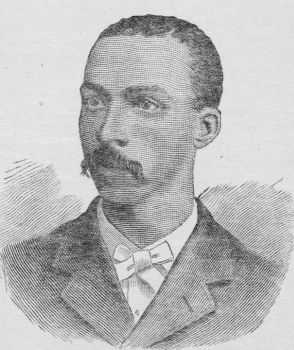
When he moved to Pueblo in 1901, he became one of the first Black lawyers to practice in the city. Townsend served as a legal advisor and advocate for the Lincoln home before moving to Denver in 1909 where he and a man named George Ross formed what historical newspapers described as “the first colored law firm with the Mississippi.”
In 1902, Townsend successfully commuted the death of his client, Lorence Heck, who had been sentenced to death. He was the first case to be tried after the state of Colorado reinstated capital punishment in 1901, in response to surges in lynching’s.
Richard Lee Biffle Jr. (1920-2000)
In 1907, Richard Biffle Sr. and his four siblings were placed at the Lincoln home. Biffle went on to work at Colorado Fuel and Iron Company (CF&I) and eventually started his own family.
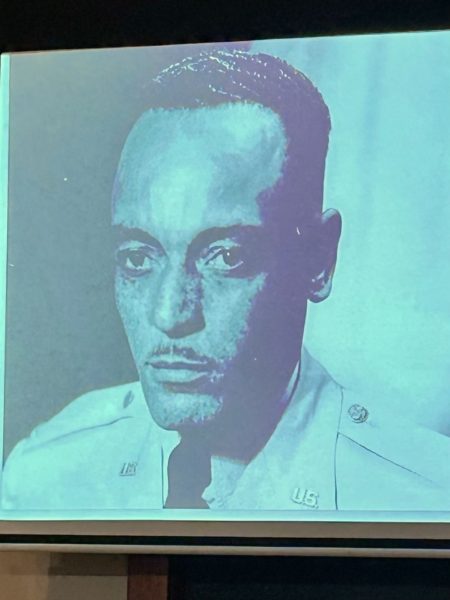
Biffle Jr., his son, was born in 1920 and quickly grew into a love for airplanes and flying. After initially being denied the opportunity to serve in World War II as a pilot due to his race, he went on to take civilian pilot training at Pueblo Community College and eventually was accepted into the Tuskegee Institute in Alabama.
“Upon graduation on Feb. 1, 1944 he joined the Tuskegee and was promoted to the first lieutenant in the United States Air Force. In 1948, he became president of the SWOOPS organization,” Brown explained. SWOOPS is a nationally recognized, Denver-based aviation club with a mission to teach African American youth about flying.
When he retired as an Air Force Lieutenant Colonel in 1971, he had completed more than 80 combat missions and served as a member of the Strategic Air Command.
“His roots started here in Pueblo. His father’s roots at the Lincoln Home,” Brown said.
Brown said his research is ongoing and hopes to continue raising awareness of African American history in Pueblo.